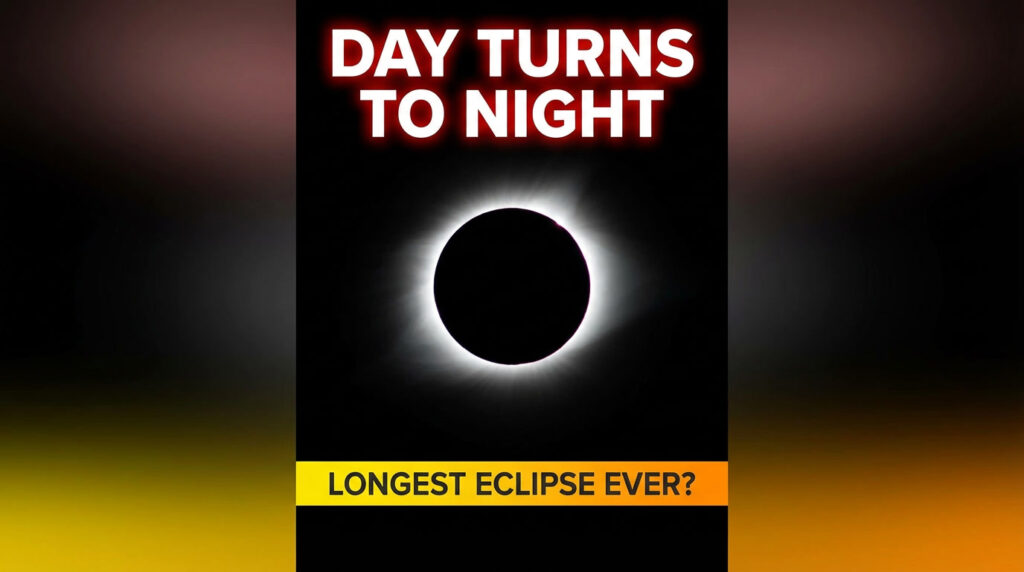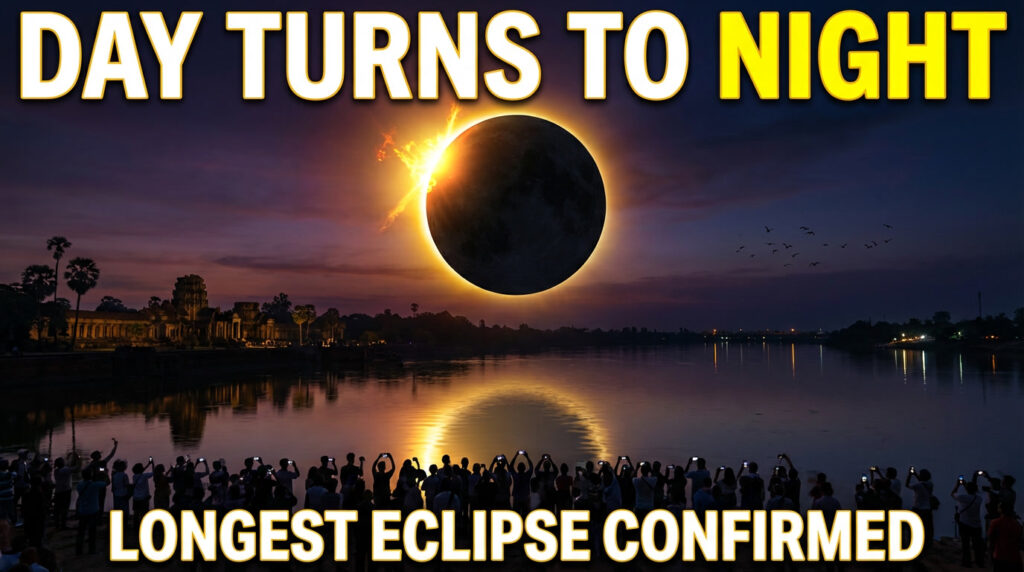
The official date is locked in: August 2, 2027. That’s when the Moon will slide perfectly in front of the Sun and turn midday into an eerie dusk across parts of Europe, North Africa, and the Middle East. At its longest, totality will last around six minutes and 23 seconds—an eternity in eclipse time. Most total solar eclipses barely give you two or three minutes before the light comes roaring back.
For a narrow band of Earth, day will drain out of the sky as if someone slowly dimmed a cosmic light switch. Streetlights may flicker on. Temperatures can drop by several degrees. The Sun’s ghostly corona—a delicate white crown of plasma—will blossom into view. People who have seen totality before say the world feels wrong and deeply right at the same time. You’re watching a clockwork that usually stays hidden. On astronomy forums, the countdown has already begun. More quietly, so has the scramble for plane seats and hotel rooms.

Ask veteran eclipse chasers and many will tell you: 1999 in Europe changed them. Or 2017 across the United States. Or 2024’s last big one in North America. They remember where they stood, who they were with, how the light turned metallic and shadows went razor-sharp. An eight-year-old in Spain in 2005 grows up to become an astrophysicist. A teacher in Egypt rearranges every vacation whenever the Moon promises to draw a dark line across a map.
The 2027 eclipse, though, has them whispering in a different tone. It doesn’t just cross postcard landscapes like southern Spain or Luxor. It hands out something rarer: an unusually long stretch of darkness over one of the most historically charged regions on Earth. Imagine standing near the temples of ancient Egypt as the Sun disappears. Somewhere, a pharaoh’s priest would nod in recognition.
Numbers help frame just how rare this is. Totality lasting more than six minutes is uncommon; many people will never experience even a single total solar eclipse in their lifetime, let alone one this long. The last comparable event occurred in 2009 over the Pacific and parts of Asia. The next of similar length won’t arrive until the 22nd century. This is the eclipse that will end up in your grandchildren’s science books.

What makes August 2, 2027 so generous is an almost perfect alignment of distance, timing, and geography. The Moon will be near perigee, slightly closer to Earth than usual, making its dark disk appear larger in the sky. Earth will be near aphelion, a bit farther from the Sun, making the solar disk look marginally smaller. Bigger Moon. Smaller Sun. Longer darkness. Add a path that crosses regions known for hot, dry summers and relatively clear skies, and you have a near-ideal setup.
An eclipse is really just geometry plus orbital mechanics. Yet when those clean equations collide with human life—holiday plans, childhood memories, a farmer’s routine, a selfie taken at exactly the wrong moment—the result feels nothing like a math problem. A civilization that lives by artificial light suddenly remembers what cosmic scale actually means.
How to Actually Live This Eclipse, Not Just Watch It
If you want to be under the Moon’s shadow when it matters, you don’t need a PhD—but you do need a plan. The central line of totality on August 2, 2027 runs across southern Spain, skims the Mediterranean, then sweeps through North Africa—Morocco, Algeria, Tunisia, Libya, and Egypt—before crossing the Middle East and the Arabian Peninsula. Anywhere along that narrow band gives you the full experience.

Pick two things early: your main country and a backup country. Andalusia in Spain and the Luxor region in Egypt will be major magnets. Once you’ve chosen a target zone, look for towns slightly away from the absolute hotspot. A quiet village gives you the same Moon with less chaos. The eclipse doesn’t care whether you’re standing by a five-star hotel or a dusty roadside café.
Timing matters. Totality occurs in early afternoon for most of the path. Arrive at least one full day early—ideally two. Transport glitches, lost luggage, and road closures hit hardest when you’re racing a cosmic clock that doesn’t wait. Many experienced chasers plan a “Plan B town” within a few hours’ drive in case weather plays double agent.
Here’s what people rarely admit: many of us leave things too late and then complain when everything is booked. During the 2017 U.S. eclipse, hotel prices in small towns jumped five- or ten-fold. Highways jammed. Gas stations ran dry. Locals found strangers camping in fields. The 2027 eclipse could be even more intense in places with fragile infrastructure and extreme summer heat.
Soyons honnêtes: nobody is used to planning life around a two-hour window six years in the future. Still, small steps now matter. Mark the date loudly. Talk early with your boss or your kids’ school. If money is tight, start a modest “eclipse jar” and feed it slowly. You don’t need a luxury tour; a budget flight and a simple guesthouse can be enough.
Another common trap is gear obsession. People arrive loaded with cameras, tripods, filters, apps—and spend totality staring at screens instead of the sky. The Sun doesn’t care about your Instagram feed. Your eyes—protected with proper eclipse glasses during partial phases—are the real instrument. Many veterans suggest taking one quick photo before or after, then letting the moment land.
“The first time I saw totality, I forgot all my settings and checklists,” one longtime eclipse hunter told me. “I just stood there with my mouth open. The data can wait. The awe can’t.”
To make the most of that narrow window, think beyond the technical.
Decide who you want beside you when the sky goes dark.
Bring low-tech comforts: water, a hat, a light chair, maybe a notebook.
Read one or two eclipse stories beforehand so your mind has a frame.
Plan a small ritual—a shared silence, a song, a before-and-after photo.
Leave room for chaos. Clouds happen. Noise happens. The Moon owes us nothing.
At a deeper level, treat the day as practice in slowness. Most of us live on fast-forward, eyes glued to screens smaller than our hands. Standing under a darkened Sun yanks your attention straight up and far out. For a few minutes, emails vanish. To-do lists dissolve. You are simply one human on one planet watching a shadow move. That kind of memory glows quietly for years.
What This Eclipse Might Change in Us
There’s a peculiar power in events everyone can share, regardless of politics, language, or income. A total solar eclipse is brutally democratic: if you’re under the shadow, you get the same darkness as the billionaire and the kid on the rooftop next door. That shared shock softens something. Strangers talk. Neighbors gather. People say “wow” in the same hushed voice.
Along the 2027 path, that experience will cross cultures rarely mentioned together. European tourists may find themselves standing beside local families in North African villages, trading eclipse glasses and phone translations. Scientists will collect data. Children will collect the moment when the world briefly turned cinematic. Some will grow up and remember it every time they see the Moon.
We all know the feeling when life reminds us we’re small—a storm, a birth, a death, a vast landscape. A long total eclipse does it more gently, more theatrically. The Sun disappears, your heart races, and then light creeps back as if the universe pressed “play” again. Everything looks the same, yet you’re not quite the same. That’s not just astronomy. That’s perspective.
Long after August 2, 2027, there will be photos, graphs, tourism numbers, and scientific papers. What lingers more quietly are personal stories: the couple who got engaged during totality, the teenager who chose physics, the elderly neighbor who stepped outside and said, “I never thought I’d live to see this.”
Maybe that’s the real story of the century’s longest eclipse. Not the rare geometry or the six-plus minutes of darkness, but the excuse it gives us to prepare, to gather, to step out of habit. To look up together. The Sun will vanish on a summer afternoon and then return. Between those two moments lies a wide open space—for awe, fear, joy, silence, or a decision you didn’t know you were ready to make.
FAQs:
Where will the 2027 total solar eclipse be visible in totality?
Along a narrow band crossing southern Spain, Morocco, Algeria, Tunisia, Libya, Egypt, then into the Middle East and the Arabian Peninsula. Outside that path, only a partial eclipse will be visible.
Why is this called one of the longest eclipses of the century?
Because the Earth–Moon–Sun alignment allows for an unusually long totality, peaking at about six minutes and 23 seconds. Most total eclipses are far shorter.
Is it safe to look at the eclipse with the naked eye?
Only during totality, when the Sun is completely covered. At all other times, certified eclipse glasses or indirect viewing methods are essential.